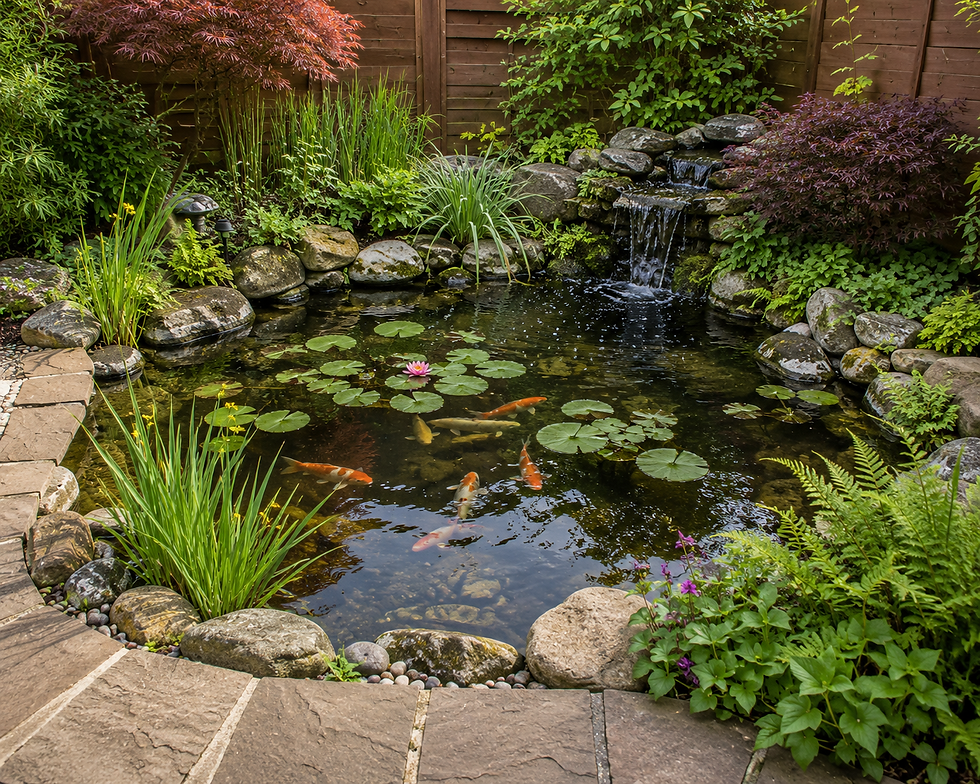
Topping Up Your Pond After a Dry Summer

It's been a hot, dry summer across much of the UK, and if you've noticed your pond water level dropping, you're not alone. Evaporation, splashing from fountains or waterfalls, and long stretches without rain can all take their toll, especially after weeks of high temperatures. Topping up sounds simple, but doing it the wrong way can shock your fish or tip your water quality out of balance.
Here's how to do it properly.
Is It Safe to Top Up My Pond With Tap Water?
In small amounts, yes, but rainwater is the better option where you can get it.
Tap water contains nutrients such as phosphates and chlorine, which can encourage algae growth and irritate fish and beneficial bacteria in larger doses. If rainwater isn't available and you need to use tap water, the key is to add it gradually rather than all at once, and to let it stand where possible so chlorine can dissipate before it reaches the pond.
A sudden influx of cold tap water can also cause a rapid temperature drop, which puts stress on fish, particularly if they've spent weeks adjusting to warmer summer conditions. Slow and steady is always the safer approach.
How to Top Up Your Pond the Right Way
Add water gradually. Rather than running a hose at full pressure, top up in stages over a few hours or across a couple of days if the shortfall is significant. This gives the pond time to adjust and avoids a sharp temperature or chemistry shift.
Control your flow rate. Using the right hose fitting makes a real difference here. A steady, controlled trickle is far gentler on your pond than an open-ended hose blasting water in. It also makes it easier to stop and check levels as you go, rather than overfilling.
Test your water after topping up. Adding a significant volume of new water can shift your pond's pH and dilute beneficial bacteria, and in some cases introduce ammonia spikes if tap water hasn't been treated. A water testing kit takes the guesswork out of this, letting you check pH, ammonia and nitrite levels so you know your pond is stable rather than assuming it is.
Avoid topping up in the heat of the day. Early morning or evening is best. Adding water when temperatures are at their peak increases the shock to fish and can make any chlorine or chemical off-gassing less predictable.
Think ahead for the next dry spell. If this summer has caught you out, a water butt or simple rainwater collection setup means you've got a ready supply of pond-safe water on hand next time levels drop, rather than relying solely on the tap.
Keeping an Eye on Things Going Forward
Topping up isn't a one-off job during a dry summer. It's worth checking your pond water level regularly through August and into early autumn, particularly if dry weather continues. Keeping a routine check means you catch drops early and can top up gradually, rather than needing a large, sudden addition of water that's harder to manage safely.
It's also worth keeping tabs on how your filtration and pump are coping. A significant drop in water level can affect flow rates and how well your system is circulating water, so it's a good moment to give your equipment a once-over while you're at it.
We Are Here to Help
A dry summer doesn't have to mean stressed fish or cloudy water, as long as you top up carefully and keep an eye on water quality as you go. The right hose fitting for controlled topping up, paired with a reliable water testing kit, makes the whole process easier to manage and gives you confidence your pond is staying balanced.
Suttons Ross supplies a range of hose fittings and pond water testing kits to help you top up safely and monitor conditions with confidence.
Explore our range of pond equipment or get in touch with our team for advice on the right products for your setup.
Frequently Asked Questions
How can I tell if a drop in water level is from evaporation or a leak?
Evaporation tends to be gradual and fairly consistent, especially during hot, dry spells. If your pond is dropping noticeably faster than usual, or losing water even after cooler days, it's worth checking liners, pipework and connections for a leak rather than assuming it's just the heat.
Should I top up more often during a heatwave than I normally would?
Yes, checking little and often works better than waiting for a big drop and adding a large volume in one go. Shorter, smaller top-ups are gentler on your pond's balance and easier to manage than trying to correct a significant shortfall in one session.
Is it worth using a dechlorinator when topping up with tap water?
It can help, particularly if you're adding tap water regularly rather than as a one-off. A dechlorinator neutralises chlorine and chloramine before they reach your fish, which is useful if rainwater isn't consistently available and you're relying on the tap through a dry spell.